
About

MBSAT: Where Neuroscience Meets Self-Mastery

Mindfulness-Based Strategic Awareness Training (MBSAT)  integrates Karl Friston’s Free Energy Principle and Active Inference theory into an eight-session, evidence-based program.  Picture your brain as an elite prediction engine that constantly  updates hidden models to minimize surprise.  

MBSAT shows you how to surface—and improve—those models  So you can: 

If you’re inspired by cutting-edge neuroscience and personal growth, MBSAT presents a unique and powerful path forward.

Who We Are

MBSAT Governance and Management

All MBSAT activities are supervised by a nonprofit foundation based in Switzerland, which undergoes an annual audit mandated by Swiss authorities to ensure transparency and maintain public trust.

Mission of MBSAT Foundation

Enhance individuals' quality of life, promote peaceful coexistence, and safeguard life on Earth by offering training in various formats to a diverse, international audience.

Foundation Board

Monika Young Elser

m.young@bluewin.ch

Jochen Reb

jreb@smu.edu.sg

Juan Humberto Young

j.young@bluewin.ch

Monika Young-Elser

m.young@bluewin.ch
President

Economist, former Swiss Ministry of Economics & UN officer; former member of senior management at Credit Suisse; champion of women’s rights in finance; long-time MBSAT practitioner.

Jochen Reb

jreb@smu.edu.sg
Research Lead

Director, Mindfulness Initiative and tenure professor of Organisational Behavior and HR, Singapore Management University (SMU); renowned scholar of decision-making; lifelong meditator.

Lukas Arnold


Board member

MBA, Master’s in Positive Leadership and Strategy; entrepreneur and mayor of a city in central Switzerland; applies MBSAT in civic innovation.

Juan Humberto Young

j.young@bluewin.ch
Founder

Former global executive in finance, consulting and other industries; entrepreneur with advanced academic degrees in business administration, finance, risk management, public management, positive psychology, and cognitive therapy.

Foundation Management Team

Dr Juan Humberto Young

Content

Prof Jochen Reb

Research

Dr Monika Young-Elser

Organisation & Planning

IT Support

Digital-marketing specialist

Marketing
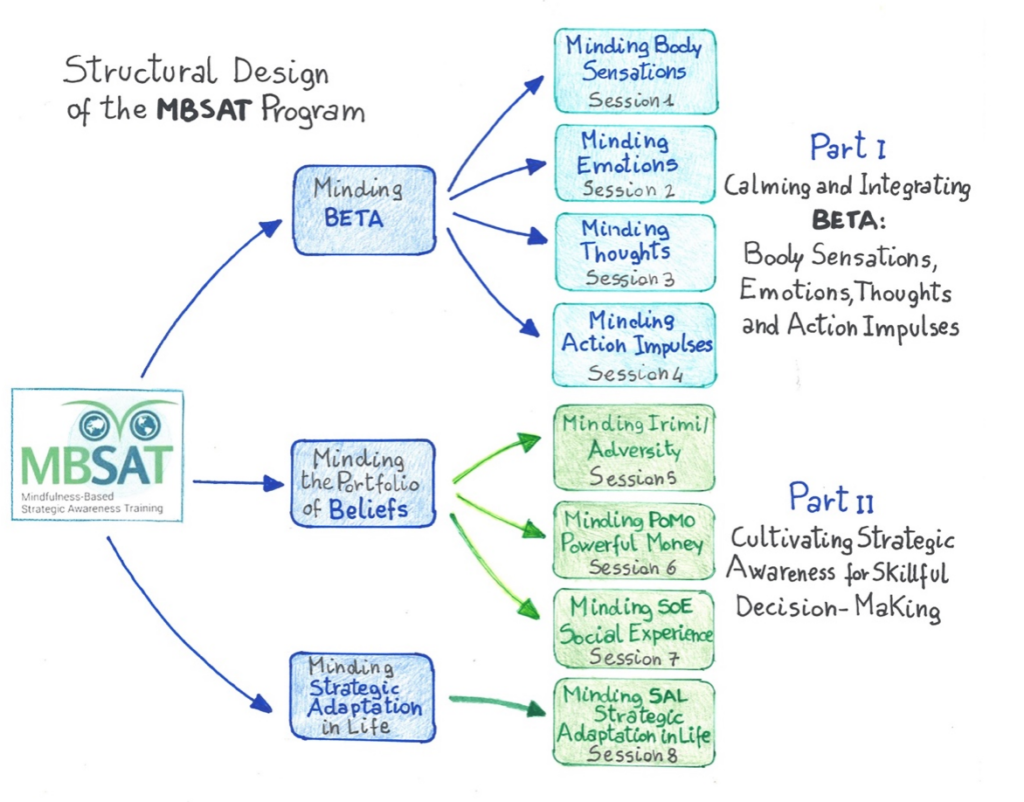
MBSAT Program Structure

Focus Outcome

Part I

Sessions 1 – 4
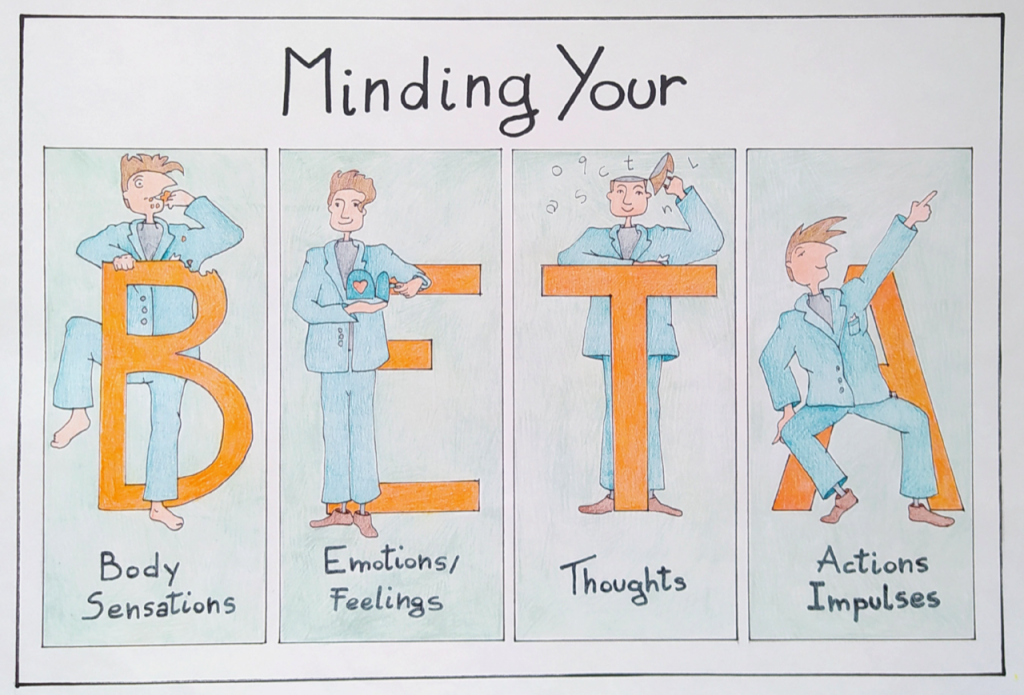
BETA – Body sensations, Emotions, Thoughts, Action impulses
Builds deep self-awareness and inner balance, reducing harmful free energy
Part II
Sessions 5 – 7
META – Updating belief systems & generative models
Re-authors limiting beliefs; handles adversity, money attitudes & social experience
Part III
 
Session 8
Strategic Adaptation – Integrating BETA + META, strategic planning for personal growth.
Crafts a lifelong adaptation map for skillful, value-aligned decisions

Part I
Sessions 1 – 4

Focus
BETA – Body sensations, Emotions, Thoughts,
Action impulses

Outcome
Builds deep self-awareness and inner balance, reducing harmful free energy

Part II
Sessions 5 – 7

Focus
META – Updating belief systems & generative models 


Outcome
Re-authors limiting beliefs; handles adversity, money attitudes & social experience

Part III
Sessions 8

Focus
Strategic Adaptation – Integrating BETA + META,
strategic planning for personal growth

Outcome
Builds deep self-awareness and inner balance, reducing harmful free energy

Highlights

Part I

Cultivating Awareness of BETA

Body Sensations, Emotions, Thoughts, and Action Impulses

Focus:

While BETA explores foundational perception and internal regulation, META engages higher-order reflective faculties. It encourages you to examine the implicit beliefs and generative models that shape your worldview, relationships, and life strategies. By doing this, you enhance your ability to make wise, adaptive decisions that align with complex realities and evolving goals.

Session 1:

BETA I – Minding Body Sensations

Tuning into body sensations helps you better understand your body’s messages, promoting perception and well-being.

Session 2:

BETA II – Minding Emotions​

Identifying emotions without judgment fosters healthy coping skills and
emotional balance.

Session 3:

BETA III – Minding Thoughts

Gaining awareness of your own inner dialogue helps reduce unhelpful thought patterns.

Session 4:

BETA IV – Action Impulses

Observing the urges behind your actions, creating space for conscious choice.

Part II

Cultivating Awareness of META

Mental Models, Economic Beliefs, Trust in Relationships and Adaptive Skillful Decisions

Focus:

While BETA explores foundational perception and internal regulation, META engages higher-order reflective faculties. It encourages you to examine the implicit beliefs and generative models that shape your worldview, relationships, and life strategies. By doing this, you enhance your ability to make wise, adaptive decisions that align with complex realities and evolving goals.

Session 5:

META I – Minding Adversity

Learning to generate “Mindful Real Options” for stressful or seemingly hopeless situations.

Session 6:

META II – Minding Beliefs About Money

Recognizing unconscious attitudes regarding money and letting go of money’s unhealthy grip on life.

Session 7:

META III – Minding Our Social Experience and Friendliness

Fostering genuine connection and friendliness in a multicultural, often anonymous world.

Part III

Strategic Adaptation in Life (Synthesis)

Focus:

Integrating insights into a cohesive lifestyle of strategic adaptation and skillful decision-making for the 21st century.

Session 8:

Minding Strategic Adaptation in Life (SAL)

Elaborating on your personal strategic plan for fulfillment and lasting well-being.

Scientific Foundations

Where Neuroscience, Mindfulness, and Management Converge

Evidence, Not Hype

Why MBSAT Is More Than a Trend

MBSAT Founder’s perspective with several decades of entrepreneurial and corporate executive experience, UBS leadership, KPMG advisory, and serial entrepreneurship, ensuring every practice is grounded in real-world decision-making.

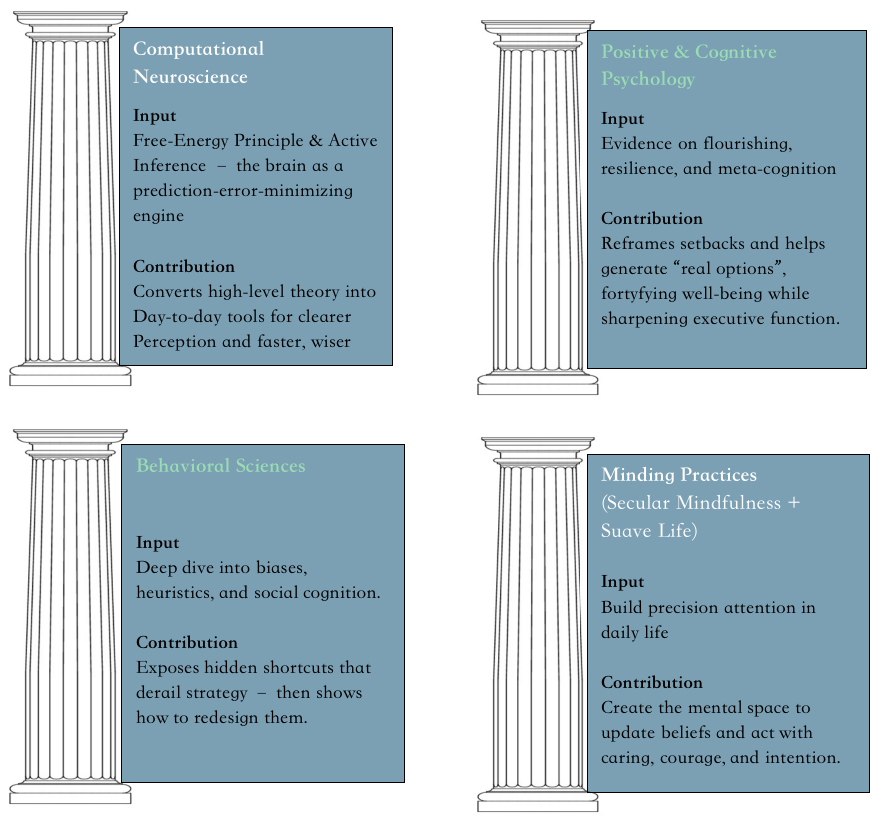
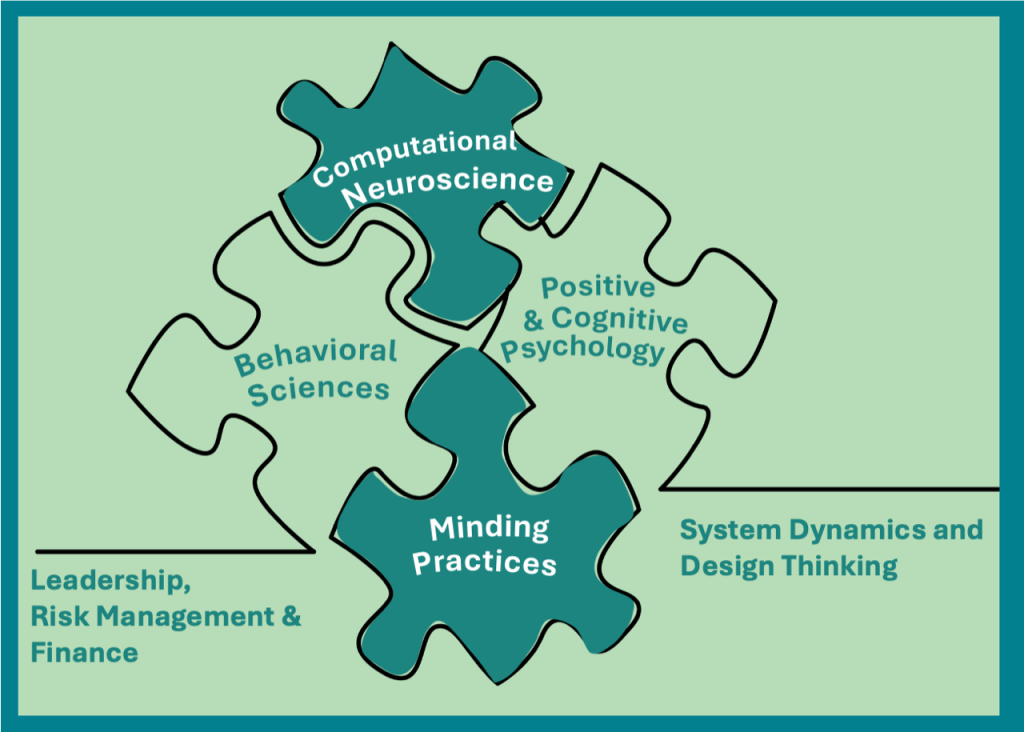
The Four Core Scientific Pillars

What It Adds How It Shapes MBSAT

Comput ational Neuro science

Free-Energy Principle & Active Inference – the brain as a prediction- error–minimising engine.
Converts high-level theory into day-to-day tools for clearer perception and faster, wiser action.
Positive & Cognitive Psychology
 
Evidence on flourishing, resilience, and metaco gnition.
Reframes setbacks as “real options,” fortifying well-being while sharpening executive function.
Behavioral Sciences
 
Deep dive into biases, heuristics, and social cognition.
Exposes hidden shortcuts that derail strategy—then shows how to redesign them.
Minding Practices (Secular Mind- fulness + Suave Life)
Builds precision attention in daily life.
Creates the mental space to update beliefs and act with caring, courage, common sense and intention.

Additional Scientific Disciplines

Leadership

aligns individual purpose with personal, organizational, and societal vision.

Risk Management & Finance

embeds wise risk-taking and resource allocation. & Finance

System Dynamics

maps feedback loops to steer constant and complex change.

Design Thinking

channels empathy and rapid prototyping into innovation (new beliefs, habits, and policies)

From Theory to Action

1. Notice BETA – Body sensations, Emotions, Thoughts, Action impulses
2. Update META – Surface and re-author your hidden belief-portfolio.
3. Strategic Adaptation – Choose options that minimise free energy and
maximise shared value

This structured approach transforms cutting-edge neuroscience into a practical, human-centered method for navigating 21st-century complexity—while staying rooted in the pursuit of meaning, clarity, and well-being.

Why It Matters
Skillful decisions – Minimal Free Energy, more adaptive choices
Rightful mindsets – Constant model-updating fuels genuine insight
Resilient individuals and cultures – Shared mindset and language for individual
and team VUCA navigation.

It “naturalises the Free Energy Principle by applying it to the
delicate practice of living in the 21st century.”

Karl Friston

Publications & Research

1. MBSAT Books

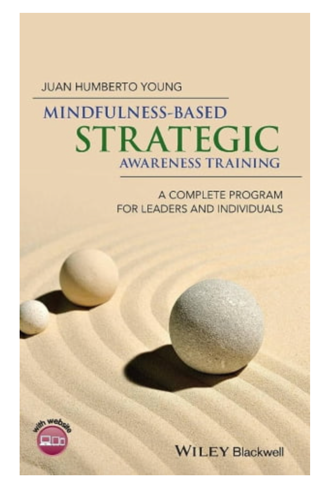
The MBSAT Manual (2016)

Complete Program for Leaders and Individuals

Evidence-based framework

for integrating mindfulness into professional and private life.

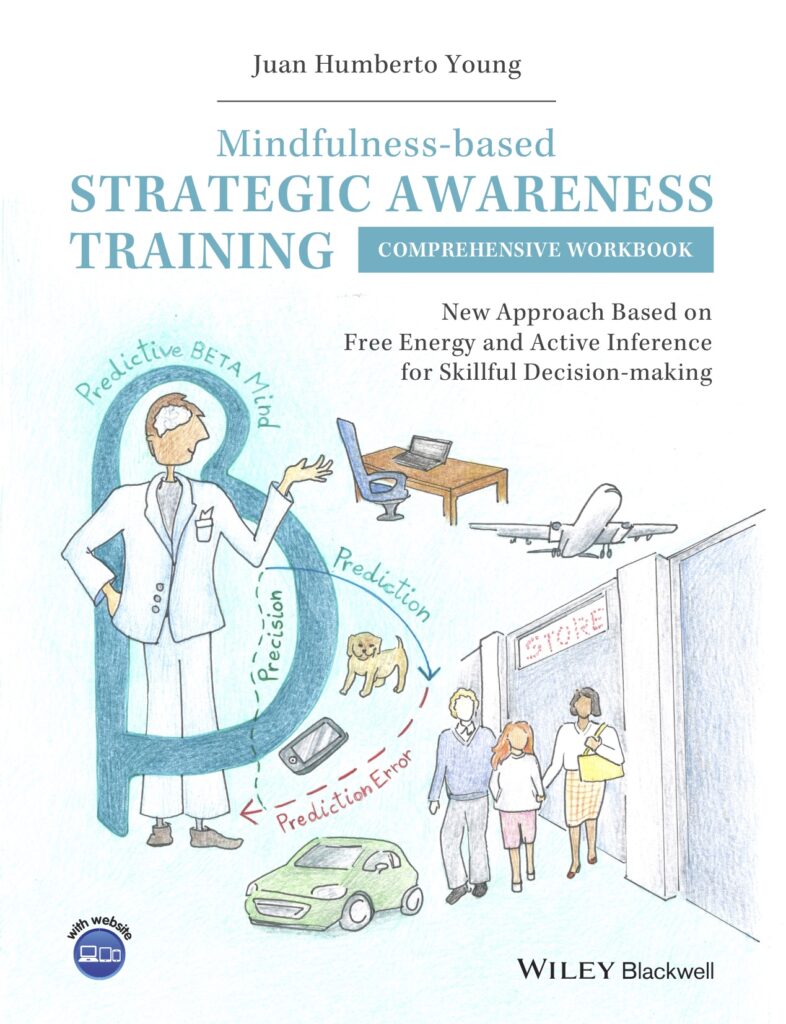
The MBSAT Workbook (2023)

Free-energy & active-inference approach to skillful decisions

Neuroscience-Based Mind Training

to sharpen strategic awareness and enhance decision-making skills.

MBSAT Research

MBSAT Experimental Study (2019 – 2023)

Peer-reviewed article in press 2025, Journal Mindfulness
Minding Well-Being: Validation of the Mindfulness-Based Strategic
Awareness Training (MBSAT) for Non-Clinical Populations
Eva Peters et al.

Study Design: Randomised control vs experimental groups (≈ 50 working
adults).
Duration: 8-week training + follow-ups over four years.
Key Outcomes: ↓ chronic worry & stress, ↑ relatedness, work
engagement, competence fulfilment.
Why It Matters: Provides rare evidence that MBSAT measurably boosts
well-being and strategic decision-capacity.

Why Evidence Matters

Many mindfulness offerings rely on anecdotes. MBSAT stands apart with peer-
reviewed proof: a multi-year, controlled study—just published in Journal

Mindfulness—showing sustained gains in well-being and strategic
awareness.

Minding as Management Approach:

Peer-Reviewed Article in special issue of Humanistic Management Journal

Minding: A Radically New Management Approach Based on Free Energy
Minimization
Juan Humberto Young

Core Ideas:

MBSAT Teacher Directory

MBSAT Teachers

MBSAT merges mindfulness with strategic awareness, empowering individuals to enhance self-awareness and make holistic, resilient decisions.
Deep understanding and skillful implementation of MBSAT interventions and practices put MBSAT teachers in a unique position to help individuals improve their decision-making skills. Strategic awareness for skillful decisions is a core component of MBSAT, because wise decisions are essential for higher levels of life satisfaction and sustainable well-being in professional as well as private life.

Our MBSAT teachers are a highly diversified group of professionals, all actively involved in a wide range of careers or businesses and simultaneously teaching MBSAT. The group includes individuals in different positions in organizations, entrepreneurs, coaches and counselors, business school professors, artists, and individuals in various other activities. What makes this group singularly attractive is their broad experience.

Hence MBSAT teachers are familiar with the challenges that their participants confront in their quest to perform successfully in a competitive environment and at the same time maintaining or increasing their well-being – two goals that often seem at odds with each other.

MBSAT teachers have a robust qualification based on the thorough MBSAT Teacher Training offered through the Mindfulness Initiative at Singapore Management University and they are required to pass the MBI-TAC before being officially certified. They must also maintain a consistent personal minding practice. “Walking the talk” is one of the main criteria for MBSAT teachers.

Michele Buonaiuto

Dr Lim Ka Tiek

Junghyo Park

Dr Jochen Reb

Dr Gerard Wong

Dr Juan Humberto

Dr Monika Young

Elizabeth Wong

Mariska Praktiek

Rudolf RondenBurg

Share you journey

Share your own journey, your experiences and reflections with us!

Your journey matters. Whether it’s a moment of growth, a challenge you’ve overcome, or a personal insight that changed your perspective—we invite you to share it with our community.